Play a move
Play directly on the board. Moves and positions save automatically.
Play the opening moves you want to remember.
 ● Active Study Line
1. e4 e5 2. Nf3 Nc6 3. Bb5
Play directly on the board. Moves and positions save automatically.
Label your opening and defense branches and add personal notes.
Explore branching variations and counter-attacks naturally.
Revisit positions anytime and drill lines to build muscle memory.
Opening study shouldn't feel like deciphering an engine log. Combine the tactile intimacy of a grandmaster's personal notebook with modern tree visualization.
 01Record what you actually play.
Forget encyclopedias with 40-move engine lines you will never encounter. Capture the lines you face in real club games, name your favorite defenses, and grow your understanding move by move.
 02Attach the "why" to every square.
Moves without ideas vanish under clock pressure. Document key pawn levers, central break timing, and piece maneuvers separately for White and Black players.
 03Turn opening anxiety into mastery.
When your opponent deviates on move 4, you won't panic. Because you studied the strategic ideas behind the structure, you know exactly how to adapt and seize the initiative.
One opening move leads to dozens of distinct pawn battles. Instead of hunting through endless nested folders, view candidate branches side by side and compare key plans in one place.
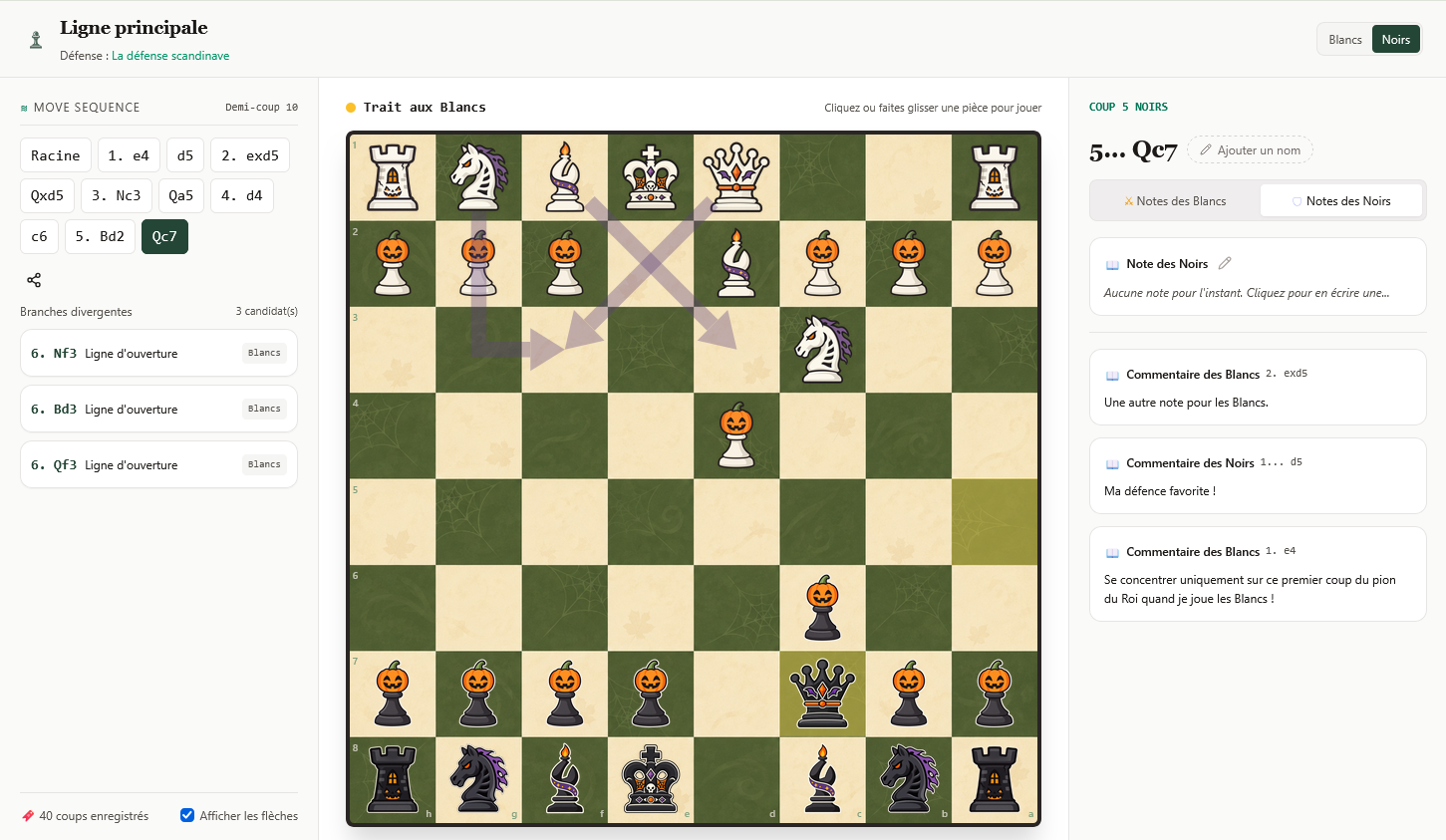
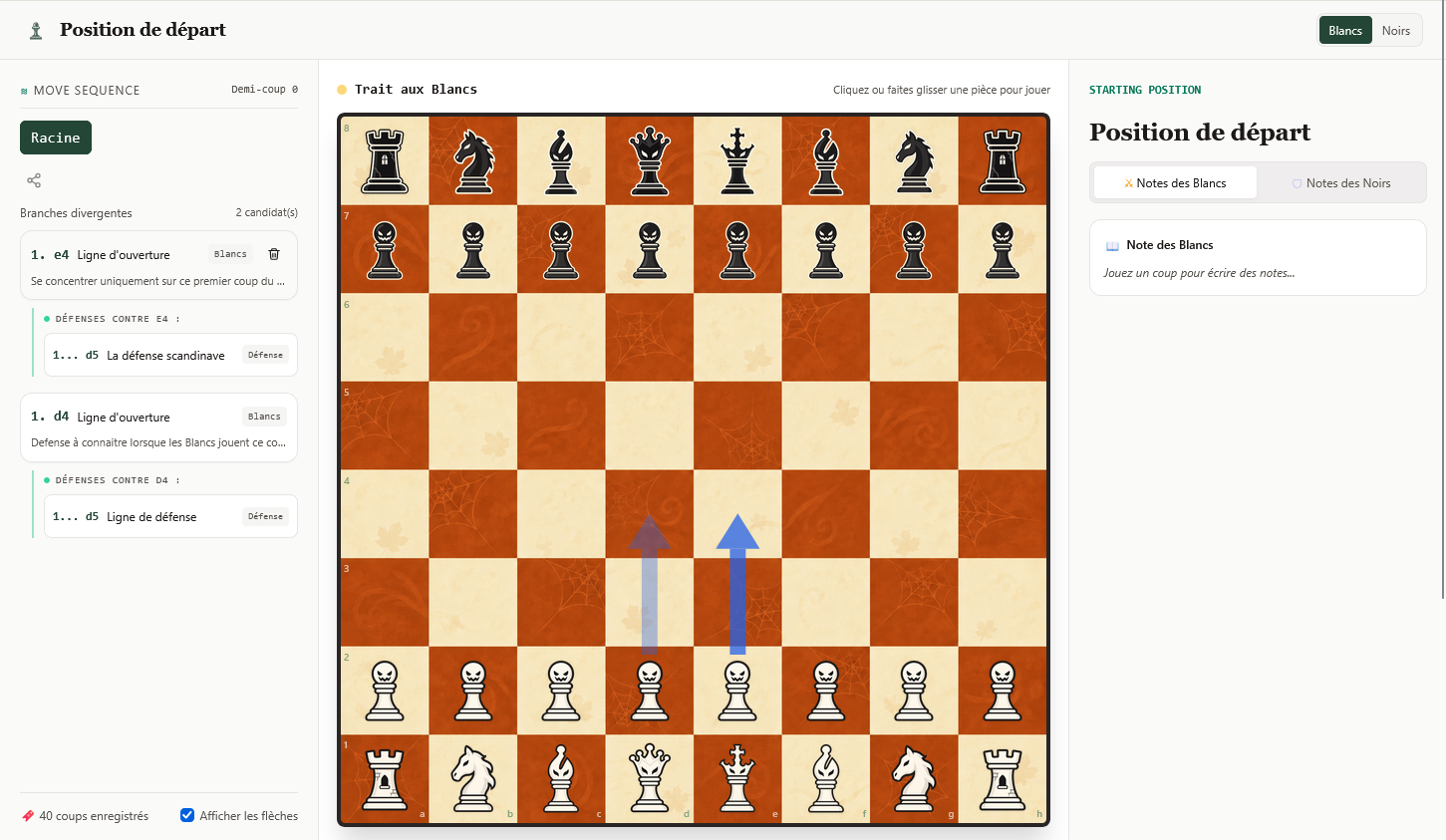
Forget messy spreadsheets and disjointed video timestamps. Our architecture treats your repertoire as a living, interconnected knowledge base.
Different move orders frequently converge to the exact same pawn structure. Our graph engine instantly recognizes matching FENs across your repertoire—so notes you write in the Queen's Gambit are automatically linked when reached via the Catalan or English.
Route A: 1. d4 Nf6 2. c4 e6 3. Nf3 d5Route B: 1. Nf3 d5 2. c4 e6 3. d4 Nf6
Review positions at the optimal psychological intervals—1 day, 3 days, 1 week, 1 month. Never blank out on move 8 in a critical tournament game again.
Attach key strategic principles to any board state. Mark critical pawn breaks (e.g. c5–d4 or …d5) and personal notes for both sides.
Your opening repertoire belongs entirely to you. Export standard annotated PGNs with comments and branching brackets anytime with zero vendor lock-in.
You can save up to 100 moves with full access to naming, notes, branches and PGN export. Upgrade anytime when your repertoire grows.
Yes. Import standard PGN files from Lichess, Chess.com or any other source, including comments and sub-variations.
You do. Export your full repertoire as annotated PGN at any time—no vendor lock-in.
Yes. The notebook works in any modern browser on desktop, tablet and phone.
Anytime. Your moves remain yours and stay exportable.